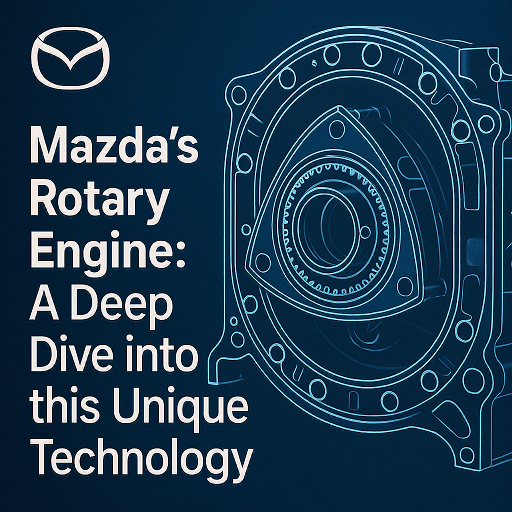
When it comes to automotive engineering, few innovations are as distinctive and intriguing as Mazda's rotary engine. Unlike conventional piston engines, the rotary engine operates on a completely different principle, offering unique advantages and challenges. Mazda has long been a pioneer in the development and implementation of rotary engines, making it a hallmark of the brand. In this blog, we’ll explore the history, mechanics, benefits, and future of Mazda’s rotary engine.
A Brief History of the Rotary Engine
The rotary engine, also known as the Wankel engine (named after its inventor, Felix Wankel), was developed in the 1950s and quickly caught the attention of Mazda. The company began experimenting with the design in the late 1950s, and by 1967, it launched the Mazda Cosmo Sport, the first production car to use a rotary engine. The unique design not only provided an innovative power source but also established Mazda as a leader in automotive technology.
Mazda continued to refine the rotary engine over the years, most notably in models like the Mazda RX-7 and Mazda RX-8. These cars showcased the performance potential of the rotary engine, attracting enthusiasts and cementing the engine’s legacy in motorsport and everyday driving.
How the Rotary Engine Works
At the heart of the rotary engine is its unique design, which replaces the traditional piston-and-cylinder arrangement with a triangular rotor that moves within an oval housing. This unconventional setup allows for continuous combustion and a more compact design. Here’s a simplified breakdown of its operation:
- Combustion Cycle: The rotary engine completes its four-stroke cycle (intake, compression, power, exhaust) as the rotor rotates around the eccentric shaft. As the rotor moves, it creates different chambers that go through the various stages of combustion.
- Less Weight and Size: The rotary engine is typically lighter and smaller than comparable piston engines. This compact design allows for greater flexibility in vehicle design and can contribute to better weight distribution.
- Fewer Moving Parts: With fewer moving parts than traditional engines, the rotary engine requires less maintenance and has a lower chance of mechanical failure.
Advantages of the Rotary Engine
Mazda’s rotary engine comes with a range of advantages that set it apart from conventional engines:
- High Power-to-Weight Ratio: The rotary engine can produce a significant amount of power relative to its size and weight. This characteristic contributes to excellent performance in sports cars.
- Smooth Operation: The rotary engine's design allows for a smoother power delivery compared to traditional piston engines, providing a more enjoyable driving experience.
- Rev-Friendly: Rotary engines can rev higher than traditional engines, allowing for greater performance potential and responsiveness.
- Compact Design: The smaller footprint of the rotary engine enables innovative vehicle designs and maximizes space efficiency.
Challenges and Drawbacks
Despite its many advantages, the rotary engine has faced challenges that have affected its mainstream acceptance:
- Fuel Efficiency: Rotary engines tend to have lower fuel efficiency compared to traditional piston engines, making them less favorable in a market increasingly focused on fuel economy.
- Emissions: Rotary engines have historically struggled to meet stringent emissions regulations due to incomplete combustion. However, Mazda has worked to address these concerns in recent models.
- Durability: While rotary engines are known for their reliability, they may require more frequent maintenance than conventional engines, especially regarding apex seals that can wear out over time.
Mazda's Future with the Rotary Engine

Despite the challenges, Mazda remains committed to the rotary engine, continually exploring its potential. In recent years, the company has introduced hybrid technology that incorporates rotary engines as range extenders. This innovative approach allows Mazda to maintain the unique characteristics of the rotary engine while addressing fuel efficiency and emissions concerns.
Mazda has also hinted at plans to revive the rotary engine in future models, with a focus on electrification. The upcoming Mazda MX-30, for example, features a rotary engine as a range extender, showcasing how Mazda aims to combine its legacy technology with modern advancements.
A Unique Innovation
Mazda's rotary engine stands out as a unique innovation in automotive engineering, representing the brand's commitment to creativity and performance. With its distinct design, smooth operation, and impressive power-to-weight ratio, the rotary engine has captured the hearts of enthusiasts and continues to influence the automotive landscape. As Mazda explores new ways to integrate rotary technology into the future of mobility, the legacy of this remarkable engine will undoubtedly live on, inspiring a new generation of drivers and engineers alike. Whether on the road or in motorsport, the rotary engine remains a testament to Mazda's innovative spirit and dedication to pushing the boundaries of automotive design.