

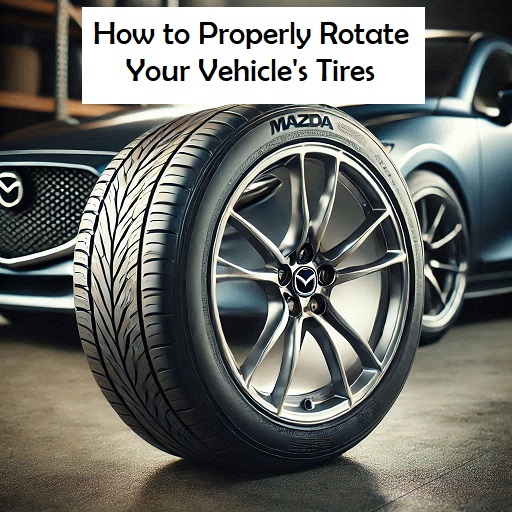
Rotating your vehicle’s tires is a crucial maintenance task that helps ensure even tire wear, extend the life of your tires, and improve overall vehicle performance. Most manufacturers recommend rotating tires every 5,000 to 7,500 miles, but it’s always a good idea to consult your owner’s manual for specific guidelines. In this blog, we’ll guide you through the steps for properly rotating your vehicle’s tires, as well as discuss the benefits of this important maintenance task.
Why Rotate Your Tires?
Before we delve into the steps for rotation, let’s explore why this practice is essential:
- Even Wear: Tires are worn differently depending on their position on the vehicle. Front tires often wear out faster due to the added weight of the engine and the steering forces they experience. Rotating the tires helps to distribute wear more evenly.
- Improved Handling: Evenly worn tires provide better traction and handling, which enhances safety and driving comfort.
- Extended Tire Life: Regular tire rotation can prolong the lifespan of your tires, saving you money on replacements.
- Better Fuel Efficiency: Properly rotated tires can improve fuel efficiency by ensuring that all tires are making optimal contact with the road.
Steps to Properly Rotate Your Tires
Tools You’ll Need:
- Jack
- Jack stands
- Lug wrench
- Torque wrench (optional but recommended)
Step 1: Prepare Your Vehicle
- Park on a Level Surface: Ensure that your vehicle is parked on a flat, stable surface and that the parking brake is engaged.
- Gather Your Tools: Collect all necessary tools and materials before starting the rotation process.
Step 2: Loosen the Lug Nuts
- Before Lifting the Vehicle: Use a lug wrench to loosen the lug nuts on all four tires. Turn them counterclockwise just enough to break their initial resistance but do not remove them yet.
Step 3: Lift the Vehicle
- Use a Jack: Locate the jack points on your vehicle and lift it high enough to access the tires comfortably. Always refer to your owner’s manual for the correct jack points.
- Secure with Jack Stands: Once the vehicle is lifted, place jack stands under the appropriate support points for safety.
Step 4: Remove the Tires
- Take Off the Lug Nuts: Now, remove the lug nuts completely and set them aside in a safe place.
- Remove Tires: Carefully take off the tires and set them aside, keeping track of their positions.
Step 5: Rotate the Tires
The rotation pattern will depend on whether your tires are directional (designed to rotate in one direction) and whether your vehicle is front-wheel drive, rear-wheel drive, or all-wheel drive. Here are common rotation patterns:
- Front-Wheel Drive Vehicles: Move the front tires to the rear, and the rear tires to the front, but swap the sides. (e.g., left front to right rear, right front to left rear).
- Rear-Wheel Drive Vehicles: Move the rear tires to the front, and the front tires to the rear, but swap the sides.
- All-Wheel Drive Vehicles: Rotate all four tires in a crisscross pattern (e.g., left front to right rear, right front to left rear, and vice versa).
Step 6: Reinstall the Tires
- Position Tires: Place each tire back onto its respective wheel hub.
- Hand-Tighten Lug Nuts: Start all lug nuts by hand to ensure they’re properly aligned. Then, use the lug wrench to tighten them slightly.
Step 7: Lower the Vehicle
- Remove the Jack Stands: Before lowering the vehicle, ensure all tools are clear and that no one is in the vicinity.
- Lower the Vehicle: Use the jack to carefully lower the vehicle back to the ground.
Step 8: Tighten the Lug Nuts

- Final Tightening: Once the vehicle is on the ground, use the lug wrench to fully tighten the lug nuts in a star pattern to ensure even pressure. If you have a torque wrench, refer to the manufacturer’s specifications for the correct torque setting.
Step 9: Check Tire Pressure
- Inflate as Needed: After rotating your tires, check the tire pressure and inflate them to the recommended PSI, which can be found in your owner’s manual or on the driver’s side door jamb.
Vital Maintenance
Properly rotating your vehicle’s tires is a simple yet vital maintenance task that can significantly enhance your vehicle’s performance and extend tire life. By following these steps and adhering to your manufacturer’s recommendations, you can ensure that your tires wear evenly and maintain optimal handling and safety. Regular tire rotation not only saves you money in the long run but also contributes to a smoother and safer driving experience. Make tire rotation a part of your vehicle maintenance routine and enjoy the benefits of well-maintained tires!
Connect with us


- July 2026
- June 2026
- May 2026
- April 2026
- March 2026
- February 2026
- January 2026
- December 2025
- November 2025
- October 2025
- September 2025
- August 2025
- July 2025
- June 2025
- May 2025
- April 2025
- March 2025
- February 2025
- January 2025
- December 2024
- November 2024
- October 2024
- September 2024
- August 2024
- July 2024
- June 2024
- May 2024
- April 2024
- March 2024
- February 2024
- January 2024
- December 2023
- November 2023
- October 2023
- September 2023
- August 2023
- July 2023
- June 2023
- May 2023
- April 2023
- March 2023
- February 2023
- January 2023
- December 2022
- November 2022
- October 2022
- September 2022
- August 2022
- July 2022
- June 2022
- May 2022
- April 2022
- March 2022
- February 2022
- January 2022
- December 2021
- November 2021
- October 2021
- September 2021
- August 2021
- July 2021
- June 2021
- May 2021
- April 2021
- March 2021
- February 2021
- January 2021
- December 2020
- November 2020
- October 2020
- September 2020
- August 2020
- July 2020
- May 2020
- April 2020
- March 2020
- February 2020
- December 2019
- November 2019
- October 2019
- September 2019
- August 2019
- July 2019
- June 2019
- May 2019
- April 2019
- March 2019
- February 2019
- January 2019
- December 2018
- November 2018
- October 2018
- September 2018
- August 2018
- July 2018
- June 2018
- May 2018
- April 2018
- March 2018
- February 2018
- January 2018
- December 2017
- November 2017
- October 2017
- September 2017
- August 2017
- July 2017
- June 2017
- May 2017
- April 2017
- March 2017
- February 2017
- January 2017
- December 2016
- November 2016
- October 2016
- September 2016
- August 2016
- July 2016
- June 2016
- May 2016
- April 2016
- March 2016
- February 2016
- January 2016
- December 2015
- November 2015
- October 2015
- September 2015
- August 2015
- July 2015
Archives
- 2023 Models
- 2024 Models
- Activities
- Automotive Cleaning
- Awards
- Beach Mazda Service
- Brakes
- Car Buying Process
- Certified Pre-Owned Mazda Vehicles
- Community Events
- Comparisons
- Down-payments
- Drive For Good
- Driver-Centric Design
- Electric & Hybrid Vehicles
- EVs
- Exterior
- Features & Specs
- Financing Your Mazda
- Fuel & Gas
- Fuel System
- Fun Stuff
- History
- Holidays
- Important Information
- Infotainment
- Insurance
- Interior
- Kodo Design Language
- Large Vehicles & SUVs
- Local
- Mazda Accessories
- Mazda Connect
- Mazda CX-30
- Mazda CX-5
- Mazda CX-9
- Mazda Model Features
- Mazda Motorsports
- Mazda Parts
- Mazda Safety Technology
- Mazda Service
- Mazda Vehicles
- Mazda3
- Millennials
- Money Saving Tips
- News
- Paint & Body Work
- Pre-Owned
- Racing
- Restaurants & Food
- Safety
- Seasonal
- Service
- Suspension System
- Technology
- Tips
- Tires & Wheels
- Towing
- Transmission
- Travel
- Uncategorized
- Weather