

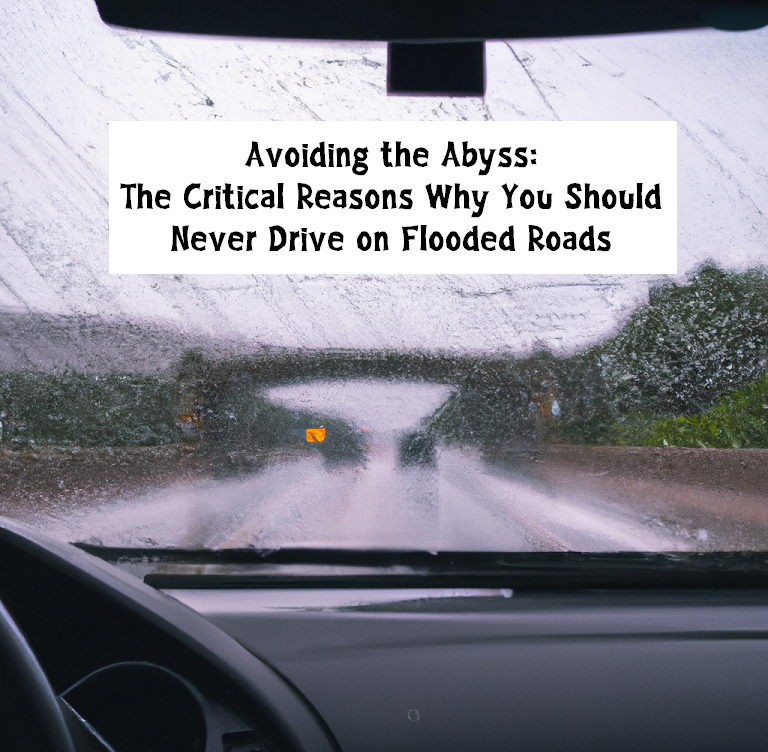
In the face of heavy rains or severe weather, flooded roads can present a deceptive and treacherous challenge for drivers. While the temptation to navigate through the water may arise, it’s crucial to understand the potential dangers and make a responsible decision. This blog will delve into the critical reasons why driving on flooded roads is a risk that should never be taken lightly.
Unpredictable Water Depth
Flooded roads can hide the true depth of the water beneath the surface. What may seem like a shallow puddle could conceal a deeper pool, making it impossible to gauge the actual water depth. Attempting to drive through flooded areas puts you at risk of getting stuck or, worse, submerging your vehicle in dangerously deep waters.
Swiftly Moving Water
Floodwaters are notorious for their swift and unpredictable currents. Even seemingly calm water can carry tremendous force, making it easy for a vehicle to be swept away. The force of moving water can quickly overpower even large and heavy vehicles, turning a seemingly innocent decision to drive through a flooded road into a life-threatening situation.
Hidden Hazards
Flooded roads may hide various hazards beneath the water’s surface, such as debris, fallen branches, or even downed power lines. These unseen dangers can damage your vehicle or pose serious risks to your safety. Driving through flooded areas increases the likelihood of encountering hidden hazards that could lead to accidents or injuries.
Engine Damage and Stalling
Floodwaters can wreak havoc on a vehicle’s engine and internal components. Submerging your car in water increases the risk of water entering the engine or other critical systems, causing extensive damage. Stalled engines are a common consequence of attempting to drive through flooded areas, leaving you stranded and facing costly repairs.

Electrical Risks
Modern vehicles are equipped with intricate electrical systems that are highly susceptible to water damage. Attempting to drive through flooded roads increases the risk of short circuits, electrical failures, and potential fire hazards. Water and electricity are a dangerous combination, and attempting to navigate flooded areas puts both your vehicle and personal safety at significant risk.
Rescue Challenges
Driving on flooded roads not only endangers your safety but also places a burden on emergency responders who may need to rescue stranded individuals. Swift-water rescue operations are complex and risky, diverting resources from other critical emergencies. By avoiding flooded roads, you contribute to the safety of yourself and the community as a whole.
Prioritize Safety
The allure of navigating through flooded roads may be strong, especially in urgent situations, but the risks far outweigh the potential benefits. The unpredictability of water depth, swift currents, hidden hazards, engine damage, electrical risks, and the strain on emergency services are compelling reasons to exercise caution and never attempt to drive on flooded roads. Prioritize safety, stay informed about weather conditions, and choose alternative routes to ensure you and your passengers navigate safely through adverse weather situations. Remember, the road to safety is the one that avoids the dangerous depths of flooded streets.
Connect with us


- July 2026
- June 2026
- May 2026
- April 2026
- March 2026
- February 2026
- January 2026
- December 2025
- November 2025
- October 2025
- September 2025
- August 2025
- July 2025
- June 2025
- May 2025
- April 2025
- March 2025
- February 2025
- January 2025
- December 2024
- November 2024
- October 2024
- September 2024
- August 2024
- July 2024
- June 2024
- May 2024
- April 2024
- March 2024
- February 2024
- January 2024
- December 2023
- November 2023
- October 2023
- September 2023
- August 2023
- July 2023
- June 2023
- May 2023
- April 2023
- March 2023
- February 2023
- January 2023
- December 2022
- November 2022
- October 2022
- September 2022
- August 2022
- July 2022
- June 2022
- May 2022
- April 2022
- March 2022
- February 2022
- January 2022
- December 2021
- November 2021
- October 2021
- September 2021
- August 2021
- July 2021
- June 2021
- May 2021
- April 2021
- March 2021
- February 2021
- January 2021
- December 2020
- November 2020
- October 2020
- September 2020
- August 2020
- July 2020
- May 2020
- April 2020
- March 2020
- February 2020
- December 2019
- November 2019
- October 2019
- September 2019
- August 2019
- July 2019
- June 2019
- May 2019
- April 2019
- March 2019
- February 2019
- January 2019
- December 2018
- November 2018
- October 2018
- September 2018
- August 2018
- July 2018
- June 2018
- May 2018
- April 2018
- March 2018
- February 2018
- January 2018
- December 2017
- November 2017
- October 2017
- September 2017
- August 2017
- July 2017
- June 2017
- May 2017
- April 2017
- March 2017
- February 2017
- January 2017
- December 2016
- November 2016
- October 2016
- September 2016
- August 2016
- July 2016
- June 2016
- May 2016
- April 2016
- March 2016
- February 2016
- January 2016
- December 2015
- November 2015
- October 2015
- September 2015
- August 2015
- July 2015
Archives
- 2023 Models
- 2024 Models
- Activities
- Automotive Cleaning
- Awards
- Beach Mazda Service
- Brakes
- Car Buying Process
- Certified Pre-Owned Mazda Vehicles
- Community Events
- Comparisons
- Down-payments
- Drive For Good
- Driver-Centric Design
- Electric & Hybrid Vehicles
- EVs
- Exterior
- Features & Specs
- Financing Your Mazda
- Fuel & Gas
- Fuel System
- Fun Stuff
- History
- Holidays
- Important Information
- Infotainment
- Insurance
- Interior
- Kodo Design Language
- Large Vehicles & SUVs
- Local
- Mazda Accessories
- Mazda Connect
- Mazda CX-30
- Mazda CX-5
- Mazda CX-9
- Mazda Model Features
- Mazda Motorsports
- Mazda Parts
- Mazda Safety Technology
- Mazda Service
- Mazda Vehicles
- Mazda3
- Millennials
- Money Saving Tips
- News
- Paint & Body Work
- Pre-Owned
- Racing
- Restaurants & Food
- Safety
- Seasonal
- Service
- Suspension System
- Technology
- Tips
- Tires & Wheels
- Towing
- Transmission
- Travel
- Uncategorized
- Weather