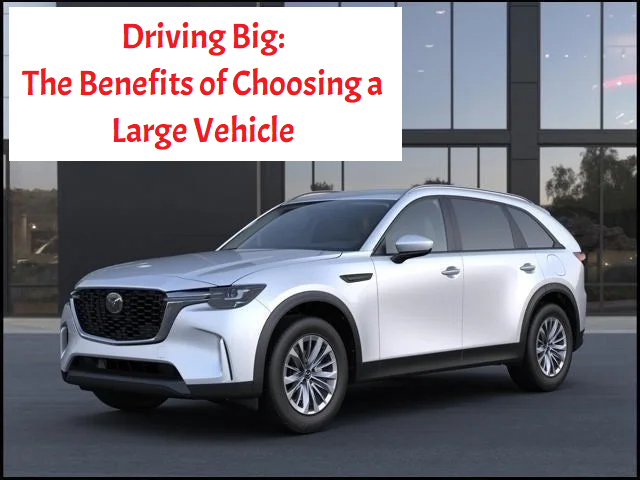
Introducing the 2024 Mazda CX-90
On the Outside
Under the Hood
Lots of Tech
In the diverse world of automotive options, the choice of a vehicle often comes down to individual preferences, lifestyle, and specific needs. While small cars have their own set of advantages, large vehicles offer a distinct array of benefits that cater to a different set of priorities. In this blog, we'll explore the compelling reasons why buying a large vehicle might be the ideal choice for you. more Spacious Interior One of the primary advantages of large vehicles is their spacious interior. Whether you have a growing family, frequently transport passengers, or simply enjoy the luxury of ample legroom, large vehicles, such as SUVs or minivans, provide a more comfortable and accommodating space for occupants. The expansive interiors also make them well-suited for long road trips, offering comfort and flexibility for both driver and passengers. Cargo Capacity Large vehicles excel when it comes to cargo capacity. If you find yourself regularly hauling sports equipment, furniture, or other sizable items, a large vehicle provides the necessary cargo space. SUVs and trucks, in particular, often come equipped with features like fold-flat seats and spacious cargo areas, making them versatile for both daily tasks and larger projects. Towing Capability For individuals who require the ability to tow trailers, boats, or campers, a large vehicle, such as a pickup truck or SUV, is the go-to choice. These vehicles are designed with towing capabilities that allow you to transport heavy loads with ease, expanding your options for recreational activities or work-related tasks. Enhanced Safety Features Large vehicles often come equipped with advanced safety features and technologies. From robust structural designs to a plethora of safety enhancements such as lane departure warning, collision avoidance systems, and multiple airbags, these vehicles prioritize the safety of both driver and passengers. The elevated driving position in SUVs also provides better visibility on the road. Off-Road Capability For those who enjoy off-road adventures, a large vehicle with four-wheel drive or all-wheel drive capability is a game-changer. Trucks and SUVs designed for off-road use can handle rough terrain, providing the freedom to explore beyond paved roads. Whether it's camping in the mountains or traversing through challenging landscapes, a large, rugged vehicle is up to the task. Commanding Presence The sheer size and presence of a large vehicle can instill a sense of confidence and security on the road. The elevated driving position not only provides better visibility but also contributes to a commanding presence, which can be advantageous in various driving situations. This sense of assurance can be particularly appealing to drivers who value a robust and imposing vehicle on the road. Individual Preferences While the decision to buy a large vehicle ultimately depends on individual preferences and requirements, the unique benefits they offer make them an attractive choice for many drivers. From spacious interiors and towing capabilities to advanced safety features and off-road prowess, large vehicles cater to a diverse range of needs and preferences. As you contemplate your next automotive purchase, consider the advantages of a large vehicle and whether they align with your lifestyle and priorities on the road.
Buying a car is a significant decision that involves a careful balance of personal preferences, financial considerations, and practical needs. Whether you're a first-time buyer or a seasoned car enthusiast, making the right choice requires thoughtful consideration. In this blog, we'll explore the top five things you should keep in mind before taking the plunge into car ownership. more Budget The first and foremost consideration when buying a car is your budget. Determine how much you can comfortably afford, factoring in not just the initial purchase price, but also ongoing costs like insurance, maintenance, and fuel. It's essential to be realistic about your financial situation and set a budget that aligns with your long-term financial goals. Don't forget to consider financing options, interest rates, and potential down payments. New vs. Used Deciding between a new or used car is a critical choice that hinges on your budget, preferences, and priorities. New cars come with the latest features, warranties, and that unmistakable "new car smell," but they also depreciate faster. Used cars, on the other hand, often offer better value for money, as they have already experienced the steepest part of their depreciation curve. Consider the trade-offs and determine which option aligns better with your needs and financial situation. Fuel Efficiency and Environmental Impact With growing environmental awareness and fluctuating fuel prices, considering the fuel efficiency and environmental impact of a vehicle is crucial. Research and compare the miles per gallon (MPG) ratings of different models to ensure your car aligns with your environmental values and provides cost savings in the long run. This consideration becomes even more significant if you plan on using the vehicle for daily commuting or extensive travel. Safety Features Safety should be a top priority when selecting a car. Investigate the safety features of the models you're interested in, including airbags, anti-lock brakes, traction control, electronic stability control, and advanced driver assistance systems (ADAS). Many modern cars come equipped with cutting-edge safety technologies that can prevent accidents and protect occupants in the event of a collision. Check crash-test ratings and reviews from reputable sources to ensure the vehicle meets or exceeds safety standards. Lifestyle and Future Needs Consider your current lifestyle and anticipate future needs when choosing a car. If you have a growing family, you might need a vehicle with more seating capacity. If you live in an urban area, a compact car with good maneuverability and parking capabilities might be preferable. Additionally, think about the car's intended use—whether it's for daily commuting, weekend adventures, or a combination of both. Ensuring that your car aligns with your lifestyle will contribute to a satisfying and practical ownership experience. A Delicate Balance Buying a car is a significant investment, and the decision-making process involves a delicate balance of financial considerations, personal preferences, and practical needs. By carefully evaluating your budget, considering new vs. used options, prioritizing fuel efficiency and safety features, and aligning the vehicle with your lifestyle, you can make a well-informed decision that not only meets your immediate needs but also enhances your overall driving experience. So, rev up your engines, do your research, and drive off with confidence in the car of your dreams.
New 2024 Mazda CX-90 3.3 Turbo Preferred AWD When it comes to family transportation, safety is paramount. Selecting a car that prioritizes the well-being of your loved ones is a crucial decision. From advanced safety features to crash-test ratings, there are several factors to consider when choosing a family-friendly and safe car. In this blog, we'll guide you through the key considerations to ensure you make an informed decision that prioritizes the safety of your family. more Crash Test Ratings Why It's Important: Organizations like the National Highway Traffic Safety Administration (NHTSA) and the Insurance Institute for Highway Safety (IIHS) conduct crash tests on vehicles, providing valuable insights into their safety performance. Tip: Research and compare crash test ratings for the specific make and model you are considering. Look for vehicles with high scores in frontal, side, and rollover crash tests. New 2024 Mazda CX-90 3.3 Turbo Preferred AWD Safety Features Why It's Important: Modern cars come equipped with a variety of safety features designed to prevent accidents and protect occupants in the event of a collision. Tip: Prioritize vehicles with advanced safety features such as antilock brakes, airbags, electronic stability control, adaptive cruise control, lane-keeping assistance, and automatic emergency braking. Size and Weight Why It's Important: Larger, heavier vehicles often perform better in crashes than smaller ones. Consider the size of the vehicle relative to your family's needs and ensure it provides adequate protection in various scenarios. Tip: Opt for midsize or larger vehicles, such as SUVs or minivans, which tend to offer better protection in accidents. Child Safety Features Why It's Important: Families with young children should prioritize vehicles with proper child safety features, including LATCH (Lower Anchors and Tethers for Children) systems and rearview cameras to aid in parking and visibility. Tip: Ensure the vehicle has sufficient space for child safety seats and strollers and check the ease of access to the rear seats. Visibility and Blind Spot Monitoring Why It's Important: Good visibility is essential for safe driving. Cars with blind spot monitoring systems can help drivers be aware of vehicles in adjacent lanes, reducing the risk of accidents during lane changes. Tip: Test the visibility from the driver's seat and look for vehicles with blind spot monitoring features. All-Wheel Drive (AWD) or Four-Wheel Drive (4WD) Why It's Important: AWD or 4WD can enhance a vehicle's stability and traction, especially in adverse weather conditions. This feature contributes to better control and handling. Tip: If you live in an area with challenging weather conditions, consider AWD or 4WD for improved safety. Reliability and Maintenance Why It's Important: A reliable vehicle ensures that safety features and systems are consistently operational. Regular maintenance is crucial for keeping the car in top condition. Tip: Research the reliability ratings of the specific make and model you are interested in, and consider the availability of maintenance services in your area. Advanced Driver Assistance Systems (ADAS) Why It's Important: ADAS, including features like adaptive cruise control, lane departure warning, and automatic emergency braking, can enhance driver awareness and actively contribute to accident prevention. Tip: Look for vehicles with comprehensive ADAS features, and understand how these systems function. Vehicle History Reports Why It's Important: Obtain a vehicle history report to check for any accidents, title issues, or odometer discrepancies. This can provide insights into the car's past and potential safety concerns. Tip: Use reputable services to obtain a comprehensive vehicle history report before finalizing a purchase. Ease of Use Why It's Important: An easy-to-use vehicle ensures that drivers can focus on the road without distraction. Intuitive controls and user-friendly features contribute to a safer driving experience. Tip: During test drives, assess the ease of use for controls, infotainment systems, and other essential features. Various Factors Choosing a family-friendly and safe car involves a thoughtful consideration of various factors, from crash test ratings to advanced safety features. By prioritizing safety in your decision-making process and conducting thorough research, you can select a vehicle that provides peace of mind and safeguards your loved ones on every journey. Remember, safety is an investment that pays invaluable dividends for the well-being of your family.